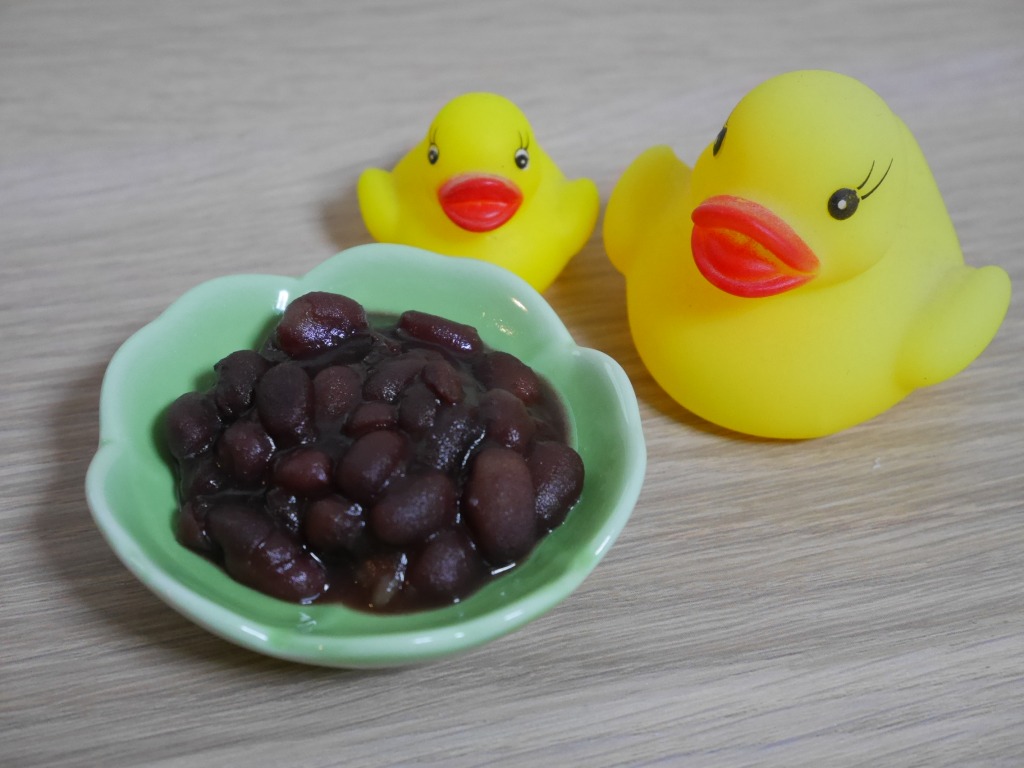
Recipe: Anko (red bean paste)
Anko is an essential ingredient in Wagashi (Japanese sweets). It is delicious on its own, but you can also enjoy it in various other ways. Generally, it refers to sweet red bean paste.
There are two types of anko: tsubuan (whole bean paste) and koshian (smooth paste). Tsubuan retains the shape of the red beans, while koshian is strained until smooth.
Azuki bean paste is rich in vitamins, iron, polyphenols, and other nutrients. We recommend making it at home so you can adjust the amount of sugar. Here is a simple recipe.
レシピ: あんこ(小豆あん)
「あんこ」は日本の和菓子に欠かせません。そのままでも美味しいですが、さまざまなアレンジが楽しめます。一般的には、小豆あんを指します。
あんこには「粒あん」と「こしあん」の2種類があります。粒あんは小豆の形を残し、こしあんは滑らかになるまでこしたものです。
小豆あんは、ビタミンや鉄分、ポリフェノールなどが豊富です。砂糖の量を調整できるので、ご自宅で作ることをお勧めします。以下に簡単レシピを紹介します。
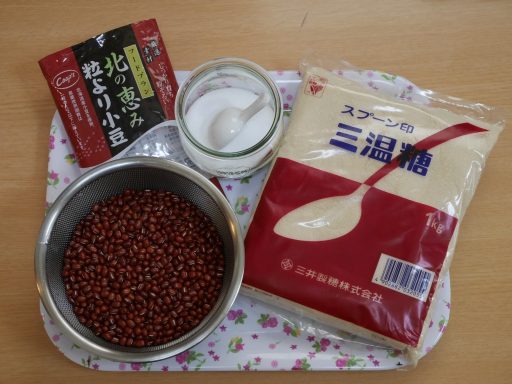
Ingredients of Anko (Azuki an) 小豆あんの材料
Ingredients (optimum quantity for one time.)
- 300g of Japanese red beans or red kidney beans (dried)
- 150g – 300g of sugar *See cooking tips below.
- A pinch of salt
材料(作りやすい分量)
- 小豆 300g
- 砂糖 150g~300g(*調理のコツ・ポイント参照。)
- 塩 ひとつまみ
How to cook Anko (Azuki an) / 小豆あんの作り方
スポンサーリンク
Directions
- Remove the harsh taste from beans
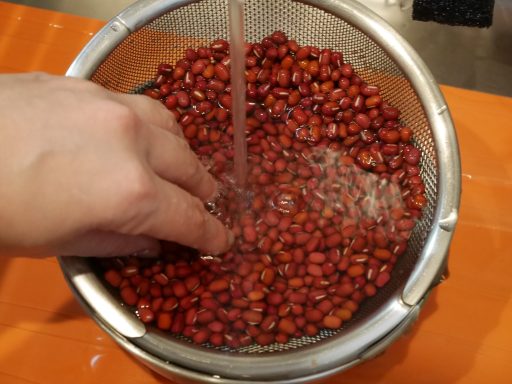
- Layer a colander over a bowl. Put red beans in it and wash lightly with water.
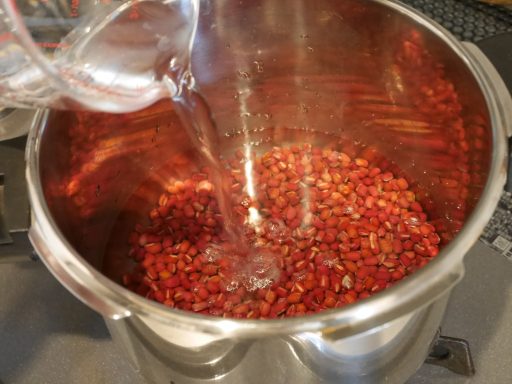
- Put drained beans and water (3-4 times as much as the beans) in a pot. Place the pot on high heat. *1
- Remove the pot from the heat when it’s boiled, drain the beans in a colander. *2
- Rinse the beans with running water and do the same steps (*1 & *2) one more time.
- Simmer the red beans
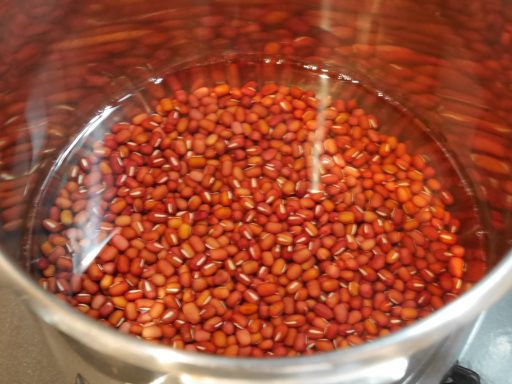
- Wash the pot lightly which you’ve just used. Then, put the beans and pour 3 times amount of water to beans. Then simmer it on medium heat.
- Turn the heat to the low when it’s boiled, keep simmering until the beans gets soft. It takes for about 30 minutes to 1 hour.
- Note; If you find the level of water gets low, add some more in the pan. Keep your eyes on the beans that they are not to be outside of water.
- Add sugar
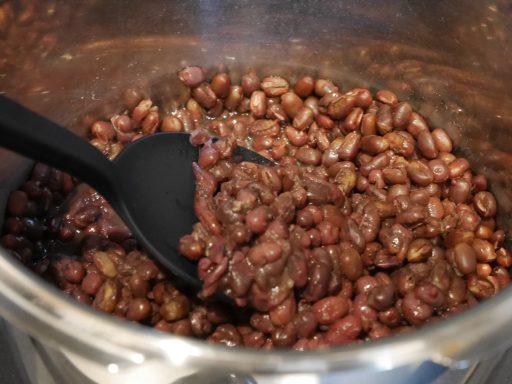
- Turn off the heat when the beans gets soft enough. It is ready when you can mash it easily by your fingers.
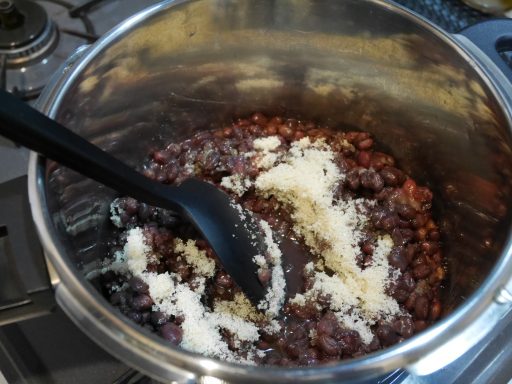
- Add 1/3 amount of sugar into the pot and mix. Repeat this two more times.
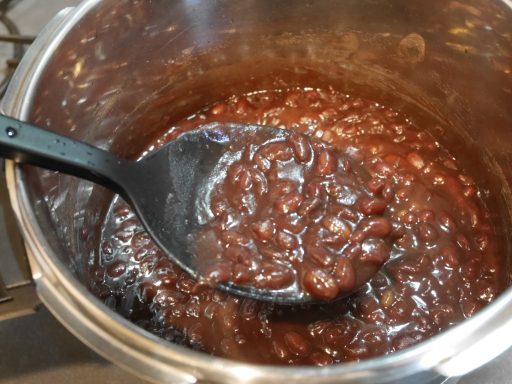
- Place the pot on medium heat, keep folding with a spatula until it reach the softness you desired.
- Finishing
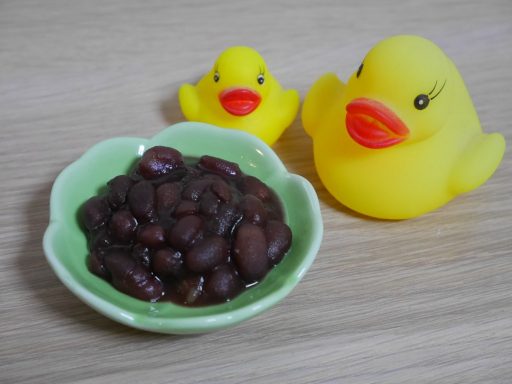
- Add salt and fold lightly, “Tsubu-an” is ready to eat!
作り方
- 小豆のゆでこぼし(渋切り)をする
- ボウルにザルを重ね、そこへ小豆を入れて、水でさっと洗う。
- 鍋に小豆とその3~4倍の水を注いで、強火にかける。*1
- 沸騰したら火を止め、ザルにあげて、ゆで汁を捨てる。*2
- 流水で小豆をさっと洗ってから、鍋に入れて同量の水を注ぎ、もう一度同じ作業(*1と*2)をする。
- 小豆を炊く
- 先程の鍋を軽く洗い、小豆とその3倍の水を入れて、中火にかける。
- 沸騰したら弱火にして、小豆が柔らかくなるまでそのまま30分~1時間くらい煮る。
- 途中で水が減ってきたら追加して、常に小豆全体が浸っているように気を付ける。
- 砂糖を加える
- 小豆を指で軽く潰せるくらいの柔らかさになったら、火を止める。
- 鍋に分量の約1/3の砂糖を加えて混ぜ、これをあと2回繰り返す。
- 再び中火にかけ、ヘラで混ぜながら好みの固さになるまで煮詰める。
- 仕上げ
- 最後に塩を加え、軽く混ぜたら「粒あん」のできあがり。
Cooking Tips
- Adjust the amount of sugar which you would like to. As a guide, you can try the amount below.
(Sugar)
50 – 60% of bean weight -> lightly sweetened
70 – 80% of bean weight -> moderate sweetness
100% of bean weight -> sweet!
*dried bean weight
- Once you add the sugar in a pan, the beans will not be soft anymore. Also, if you put the sugar at once, the beans will be hard. Be careful about the timing to add the sugar.
- The “Anko” you cooked will become harden when it gets cold. So maybe you should stop heating a little earlier.
- If you want to preserve some Anko for later, it’s very useful if you divide it into small amount and put in the storage bags or containers. It’s good for about a week in the refrigerator and for about a month in the freezer.
- You can save some time of cooking, when you use a pressure cooker instead of a pan. (on step2) For your safe, refer to the manufacturer’s guide based on the model of a pressure cooker you own. The cooking time will be 15 minutes on low heat under pressure.
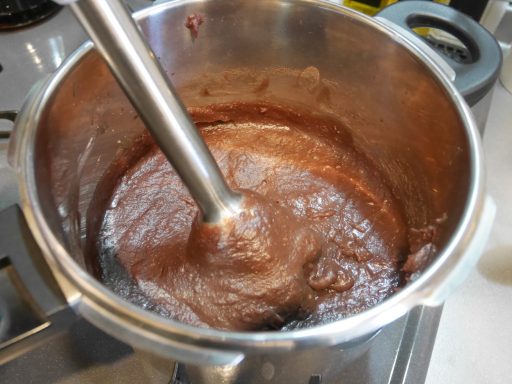
- If you try to make “koshi-an”, after STEP2, use a blender smooth and creamy. Then, turn to STEP3.
-> Originally, there are many steps to make “koshi-an” because it needs to remove its skin by using strainer and cotton cloth. But it takes time to do and hard work.
So, I used a hand blender and crush them to make its texture creamy.
Easily enjoy to make them at home, I used a hand blender this time.
In this way, you can take many nutrients of azuki skin without through it away.
244 kcal / 100g *depends on the amount of sugar you use.
Salts less than 0.1g
調理のコツ&ポイント
- 砂糖の量は、下記を参考にお好みで加減してください。
小豆(調理前)の重量の半分~6割 控えめな甘さ
7割~8割 マイルドな甘さ
10割(同量)しっかりとした甘さ
- 砂糖を入れると、小豆はそれ以上柔らかくなりません。また、全量を一度に入れると硬くなってしまいますので注意しましょう。
- 出来上がった餡子は冷めると固まるので、お好みよりも少し柔らかめで火を止めると良いです。
- 餡子を保存する場合は、冷ましてから小分けにすると後で使いやすいです。冷蔵庫で約1週間、冷凍庫で約1か月間保存できます。
- 手順2で、お鍋の代わりに圧力鍋を使うと時短ができます。お持ちの圧力鍋の取扱説明書に従って調理してみてください。加圧時間は弱火で約15分です。
- 「こしあん」を作るには、手順2のあと、小豆をハンドミキサーやフードプロセッサーで滑らかなペースト状にします。次に鍋に戻し、手順3以降の作業します。
→本来なら、漉し器やさらし(布)等を使い、裏ごしという作業をして作りますが、大変手間がかかるので、家庭で手軽に楽しむためにハンドミキサーを使いました。皮に含まれる栄養素も、捨てずに一緒に摂ることができます。
スポンサーリンク
コメントを残す